Women shaping words and worlds
Context: From 2–6 March 2026, Lucian Blaga University of Sibiu hosted Gender Equality Week, a series of events organised within the FERBOPO ERA Chair project that brought together students and researchers to reflect on gender equality.
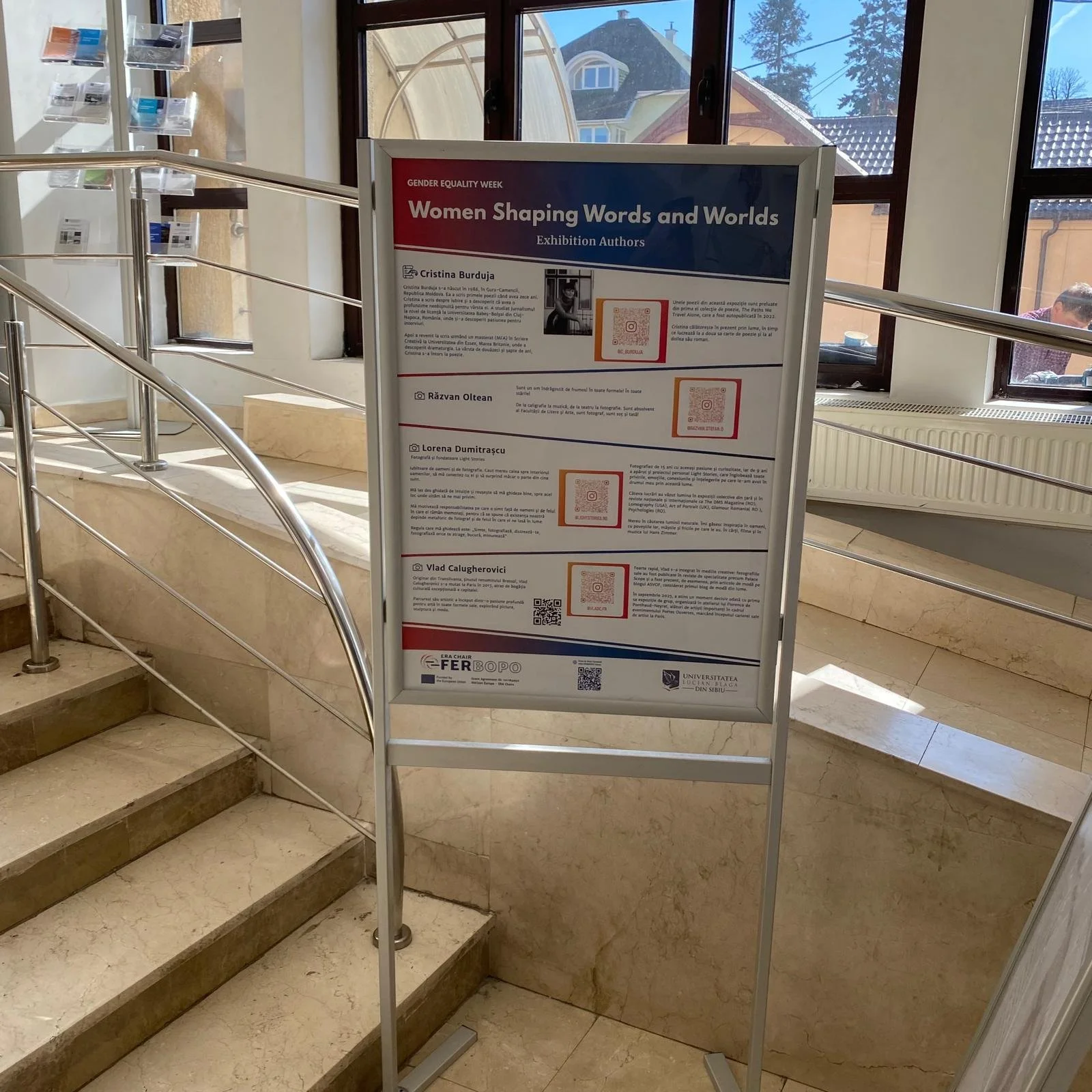
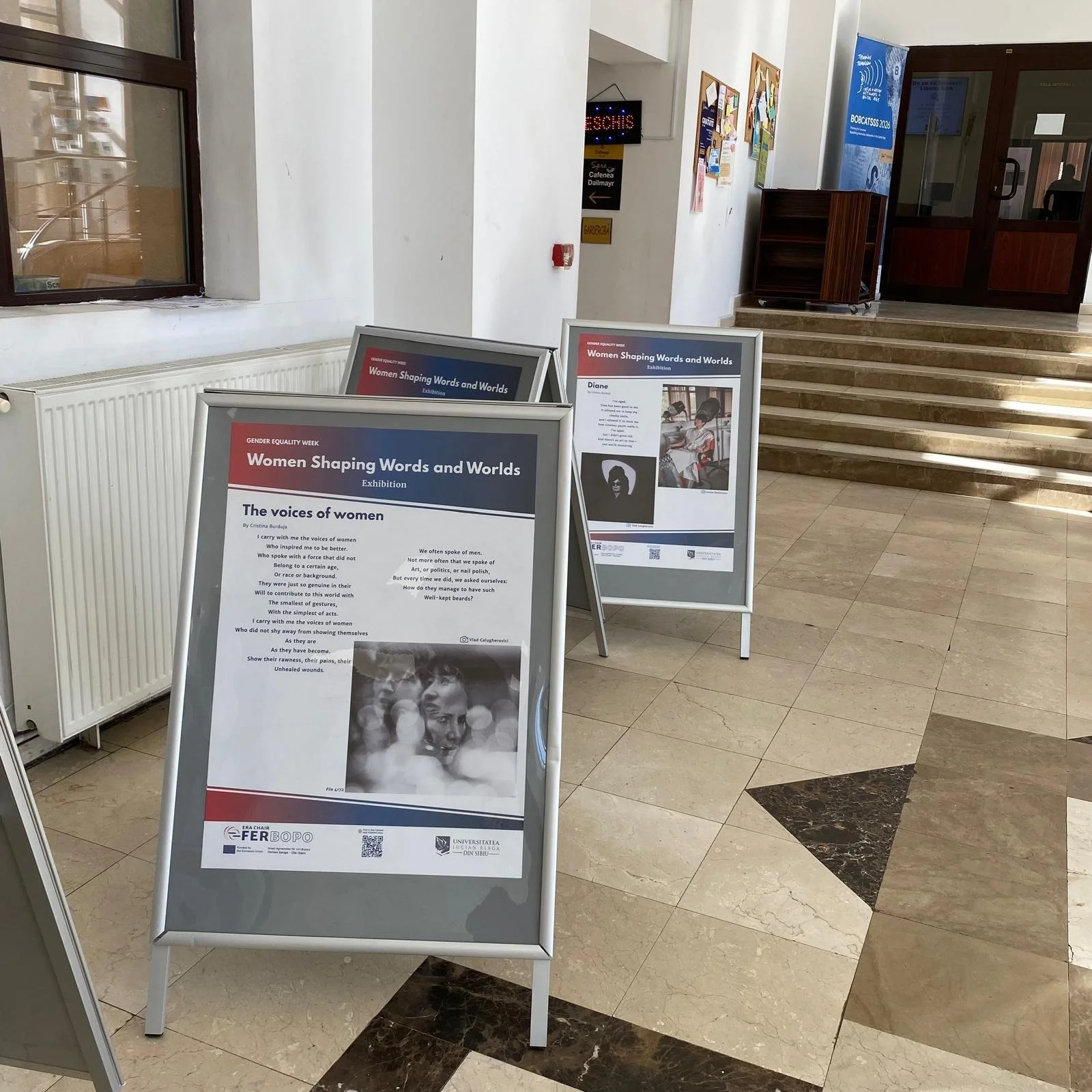
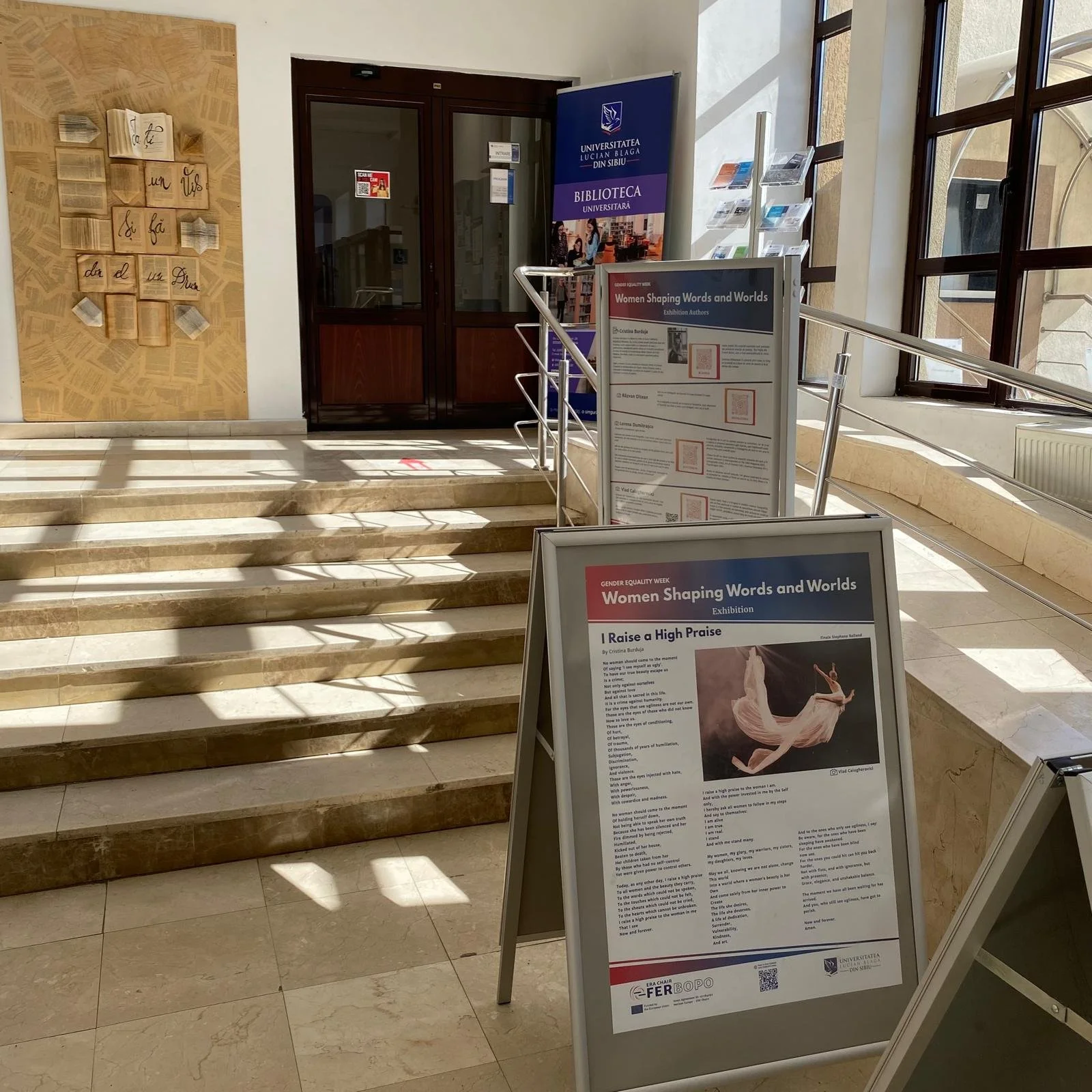
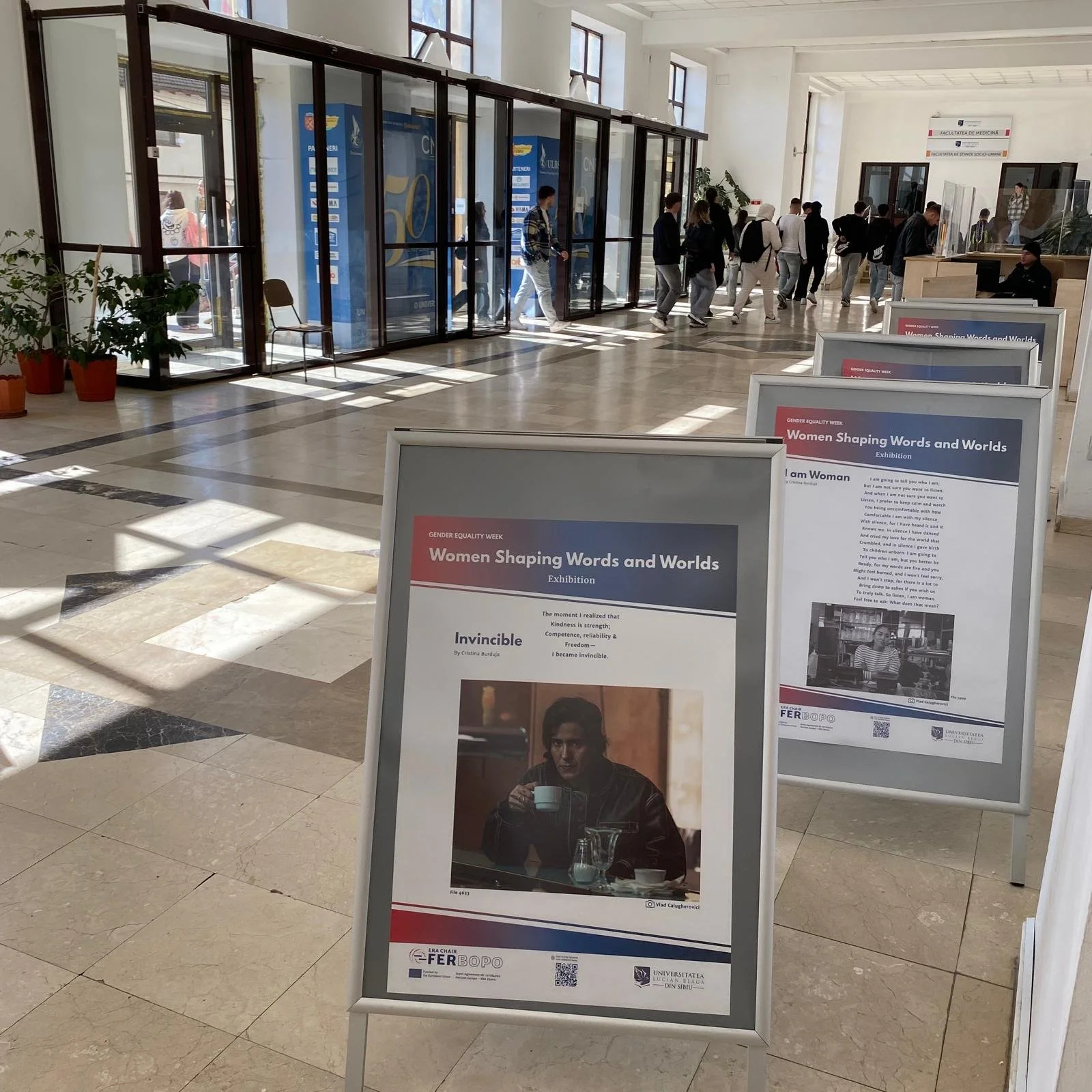
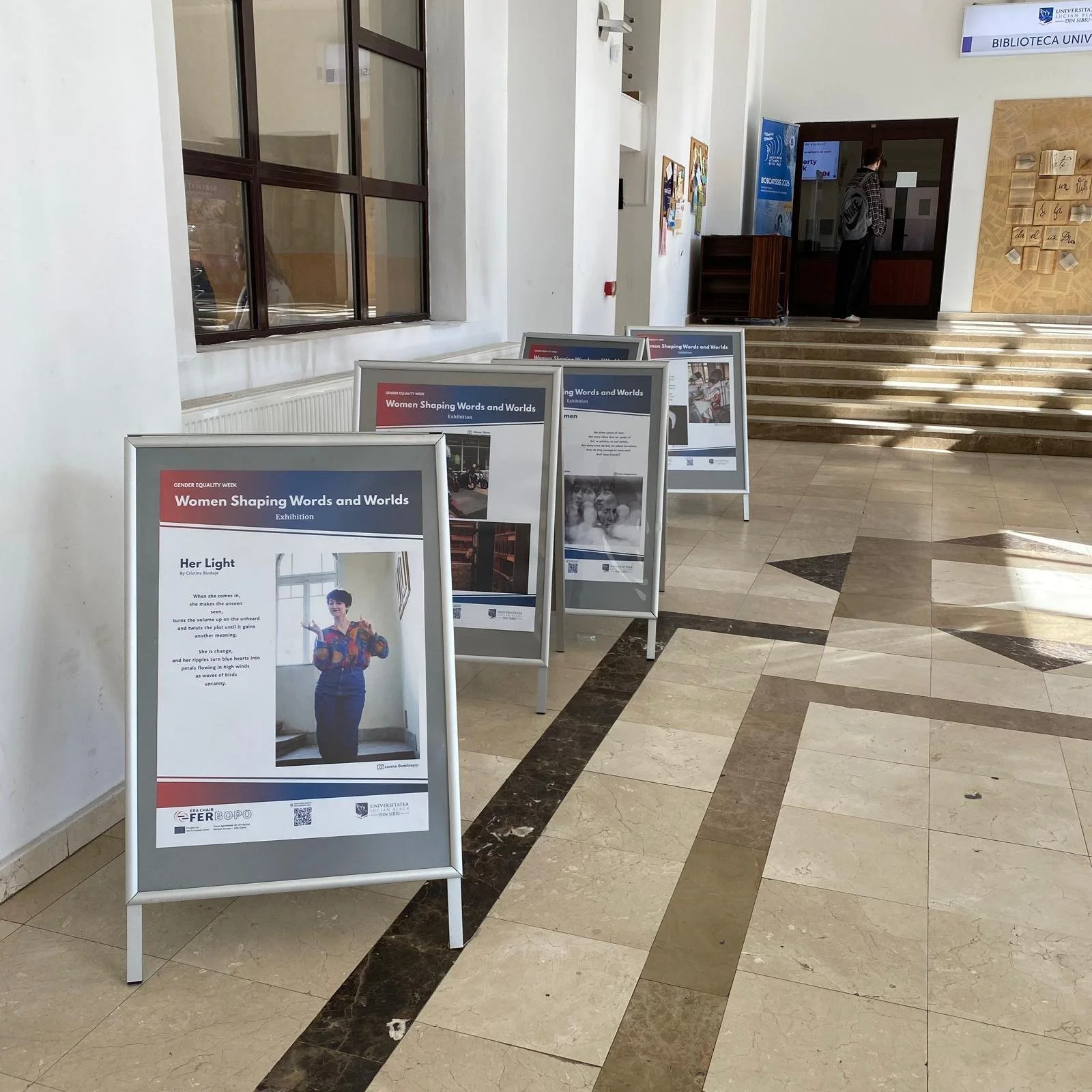
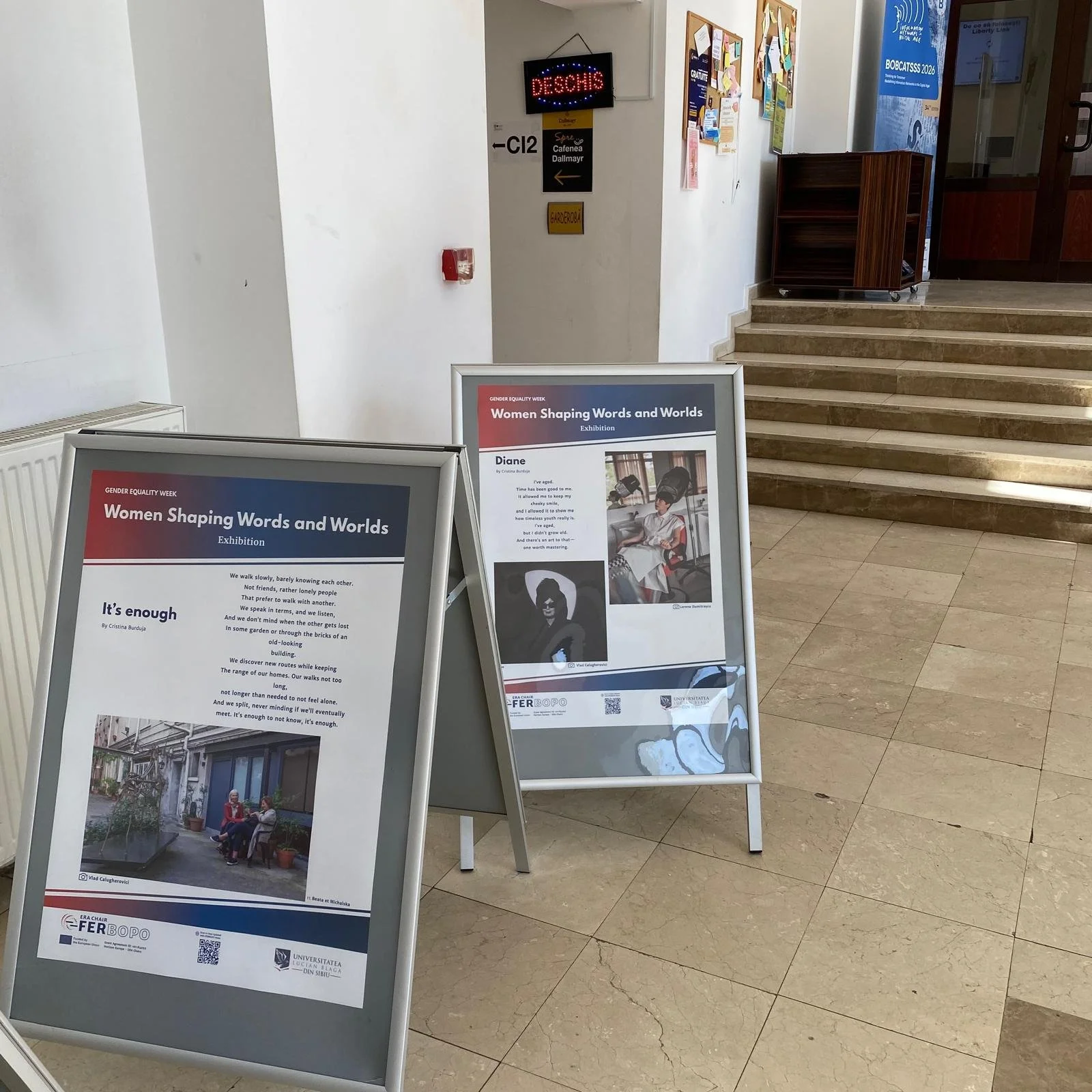
Held at the ULBS Library, the programme included discussions, research presentations, and an exhibition aimed at encouraging dialogue on topics such as workplace culture, leadership, political participation, institutional transformation, and the relationship between religion and gender.
Whenever the subject of gender equality appears, it is often treated like a debate—as if equality itself were something still waiting to be proven. But men and women are humans. That is the starting point.
Debating their equality sometimes reminds me of debating the equality between red and green. You could continue the argument endlessly, yet the truth would remain the same: they are both colors.
So if equality itself is not really the question, what are we actually talking about when we talk about gender equality?
First, it depends on where we are. Talking about gender equality in Romania (where the exhibition took place), in Moldova (where I come from and currently reside), in Great Britain (where I lived for two years), or in Berlin, Germany (where I lived for five years) means looking at the level of access women and men have to jobs, voting, equal pay, opportunities, free speech, and expression.
Even when we try to talk about gender equality in universal terms, we eventually return to real places and real societies.
Since I have not spent much time studying the statistics, the only perspective I can offer is my own experience.
I lived in Romania for about twelve or thirteen years. I moved there when I was sixteen to attend high school, after my parents decided to send me—and my brother Alexandru, who was already living there—for a better education.
I studied at Colegiul Național George Barițiu in Cluj-Napoca, where I met my best friend, Xenia Mateiu. Later I went to university and finished a degree in Journalism. After working in journalism for a while, I decided to travel.
Traveling is my greatest passion—even greater than writing.
During my travels I met many inspiring people and eventually decided to pursue writing more seriously. That is how I ended up studying for an MFA in Creative Writing at the University of Essex.
Afterward I lived briefly in London before returning to Cluj-Napoca and opening an art house called Potpourri, where I hosted contemporary artists and collaborated with festivals, NGOs, and art groups.
Due to my lack of business experience, I made many mistakes and had to close the house after less than a year, losing a significant amount of money. After three more years in Romania, I moved to Berlin, Germany, where I spent five years working with artists as a curator and as part of the art collective Wanderzirkus, which organized music festivals and built stages for major festivals across Germany, and the globe.
Throughout all this time, I continued traveling.
As I write this blog post, I am in India. Since December I have been traveling through Southeast Asia. So far I have visited 47 countries across four continents—about 23% of the world.
What has this life experience taught me about gender equality?
It has taught me that I am a privileged woman.
I had access to education and higher studies. I was able to work freely in Romania, England, and Berlin, Germany. I was never mistreated because of my gender. In Berlin, people rarely cared about my gender at all—especially since many assumed I was German.
Growing up in Moldova, I saw women as leaders. My grandmother led the household, as does my mother, and from family stories it seems my great-grandmother did the same.
My brothers, who own the Big Construct company in Florești, often say that Moldova is matriarchal. When couples come to buy construction materials, negotiations usually happen with the woman—she knows what is needed and often manages the budget.
This does not mean that gender gaps do not exist. But in countries like England, Germany, and increasingly Romania, those gaps are slowly being bridged thanks to people who invest their time, energy, and effort into change.
Because of their work, women like me have the privilege of time and freedom.
And that raises an important question: what can we do with that privilege?
What I do is travel and write. I use my time to explore the world and exercise my freedom by creating art. That is a luxury forbidden to many people, men and women, across the world.
And sometimes, my writing leads to invitations—like this one from Greta Timea Biro, a member of the university’s staff, who held a session on March 5 titled “Negotiating Identity in the Context of Human Rights and Islam: A Case of Transgender Community-Based Organizations from Malaysia.”
In exhibitions like this, my poems accompany the works of other artists. Together, they create a space for dialogue where we can share our experiences and reflect on who we have become—as women, as citizens of our cultures, and as people of the world.
Let us continue this conversation. Let us keep learning how to express the realities of our lives, not by searching for blame or dividing ourselves into sides, but as an exercise in polishing the language of our shared humanity.
My poems accompanied the photographs of Vlad Calugherovici. You can find him on Instagram here.
You can find me on Instagram here, and follow for more frequent content, including my almost daily exercise in writing 9 words poems.
